
Doors · 4 min read
Pivot door or hinged door? Architectural impact versus everyday use
A pivot door rotates around an axis set in from the side edge. This enables very tall, wide entrances and a distinctive movement that can define a modern facade. The effect has trade-offs: part of the leaf swings inward, while threshold drainage, weather seals and motion control need a well-engineered system.
LUPOL editorial team · Published: 27 July 2026
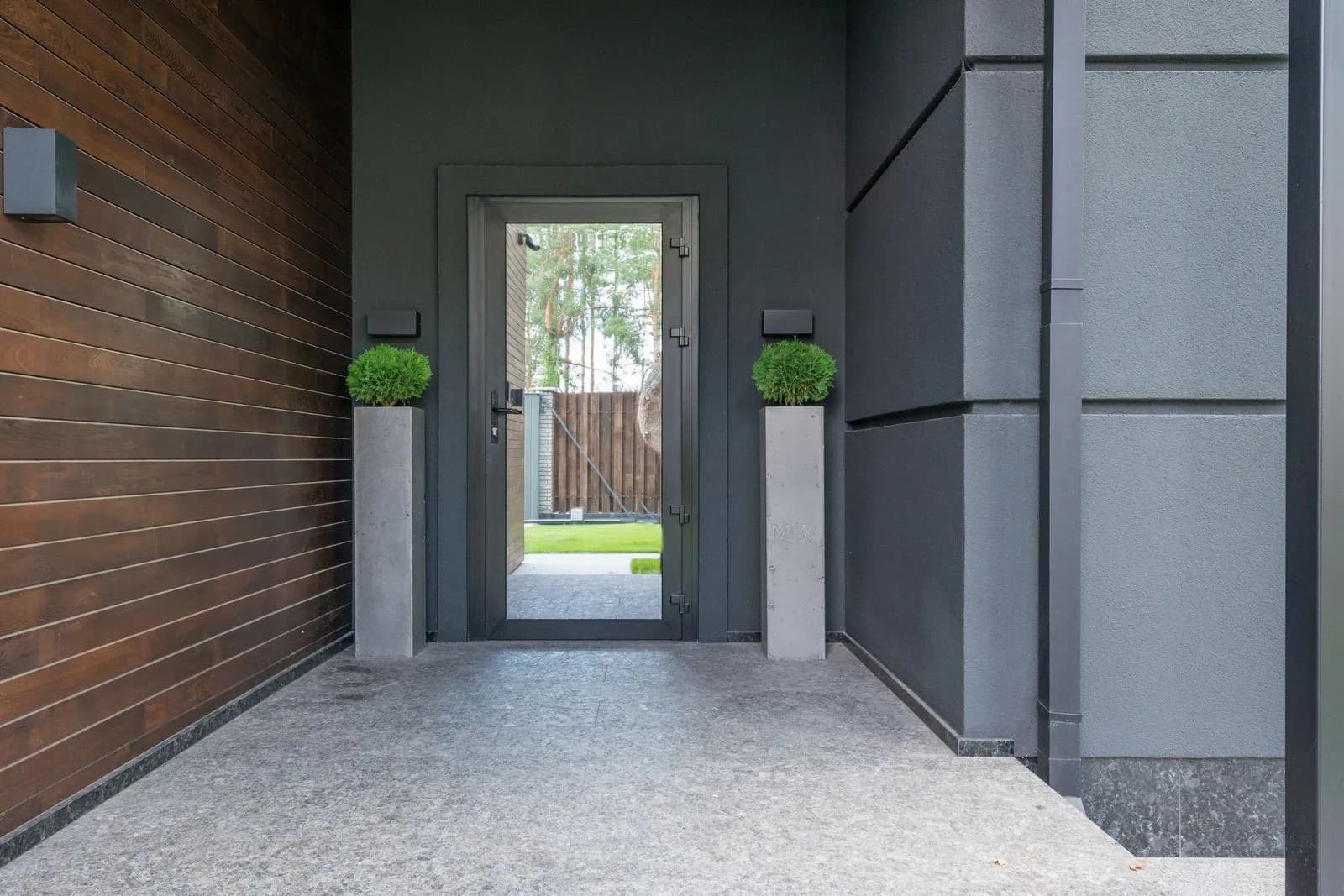
Photo: Muharrem Alper / Pexels · source and licence
In this article
01
An offset axis changes both swing and usable width
Conventional hinges sit at the edge. A pivot normally hides top and bottom bearings farther into the leaf. The short section travels opposite to the main opening, creating balanced movement and allowing substantial hardware to disappear.
Overall opening width is not clear passage. The section between pivot and edge occupies space, while the leaf needs room on both sides of its closed plane. Plans must account for mats, furniture, switches, handles and circulation.
02
A large format needs structural design, not just a bigger leaf
Pivot mechanisms can support exceptional weights; FritsJurgens documentation includes capacities measured in hundreds of kilograms. That does not mean any slab, lintel and floor can accept the loads. Designers must address support, leaf stiffness, movement and settlement.
A flush threshold looks clean but an exposed entrance needs falls, drainage and protection from wind-driven rain. Underfloor heating, waterproofing and floor layers must be coordinated with the bottom mechanism before construction is finished.
03
Weather and thermal performance must cover the complete door
A thick leaf and long pull handle do not prove thermal, water or air performance. EN 14351-1 covers declared characteristics for external pedestrian doors. Ask for figures applying to the specified size, threshold, glazing and lock, not a smaller related model.
Seals at corners and around the pivot move differently from side-hung door seals. Consistent compression and later adjustment matter. On an exposed elevation, a conventional tested threshold and canopy can be more robust than the most minimal pivot detail.
04
Clear passage, finger safety and accessibility need checking
The short edge behind the pivot creates an unfamiliar moving zone. Pinch points need control, closing speed must be appropriate and a heavy leaf should not accelerate in wind. Safe daily behaviour matters more than a theatrical swing.
Measure clear opening at the normal angle. Wheelchairs, furniture and deliveries need a predictable unobstructed route. A conventional door with an opening sidelight can provide occasional extra width without sacrificing an efficient everyday leaf.
05
Locks, controls, cost and future service form one system
Multipoint locks, electric releases, sensors and readers must work with the pivot. Confirm power-failure behaviour and manual egress. Adjustment points, power supplies and cables should remain accessible without removing the finished floor.
The quote should include pivots, frame, threshold, drainage, transport, heavy installation and commissioning. Ask about declared performance, adjustment, parts and inspections, then try a similarly sized working door. Conventional hinges remain a modern answer when simplicity and serviceability lead the brief.
The key takeaway
A pivot is a system of structure, threshold, sealing and motion control, not merely a hinge type. It works best when designed with the building from the start; choosing from an image alone can produce narrower passage and harder servicing.