Smart home · 5 min read
Smart locks for external doors in 2026: convenience without compromise
The entrance door is becoming part of the smart home. It can open with a fingerprint, PIN, phone or temporary guest credential, but the right choice does not begin with an app. First check the door mechanics, multipoint locking, emergency access, power and the manufacturer's security-update policy.
LUPOL editorial team · Published: 25 July 2026
Photo: Joppe Beurskens / Pexels · source and licence
In this article
- 01A smart lock is a system, not an electronic accessory
- 02Choose fingerprint, PIN, phone or credential around real users
- 03Electronics do not replace a resistant door construction
- 04Cybersecurity needs attention before purchase and after installation
- 05Power and connectivity require a failure plan
- 06Use a complete checklist when requesting a door quotation
01
A smart lock is a system, not an electronic accessory
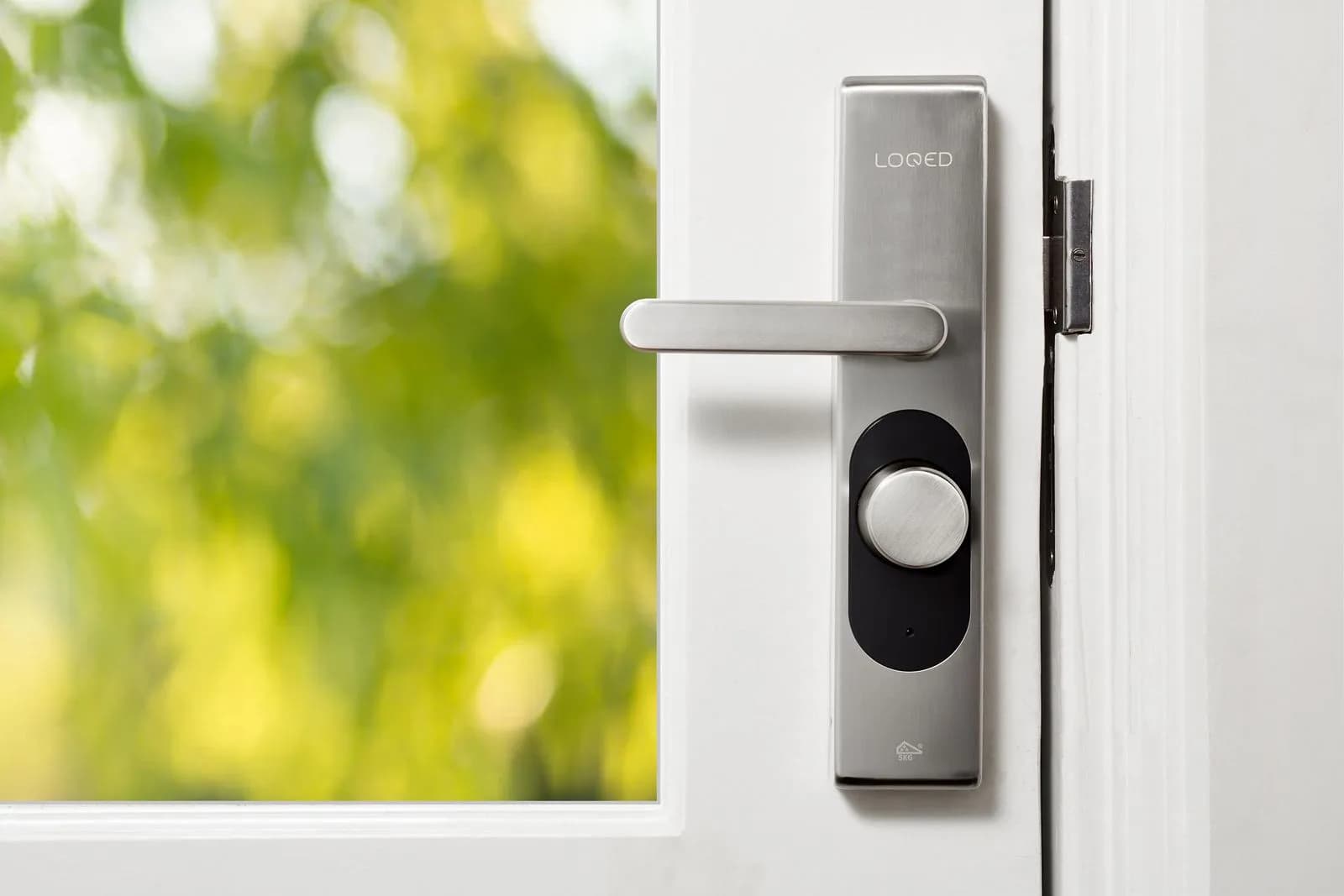
Residential access is rapidly combining biometrics, mobile credentials, video intercoms and building automation. A connected lock can report door status, issue time-limited codes, record events and interact with an alarm. Those functions can help a family, landlord or homeowner, but they also add components that must remain compatible and supported.
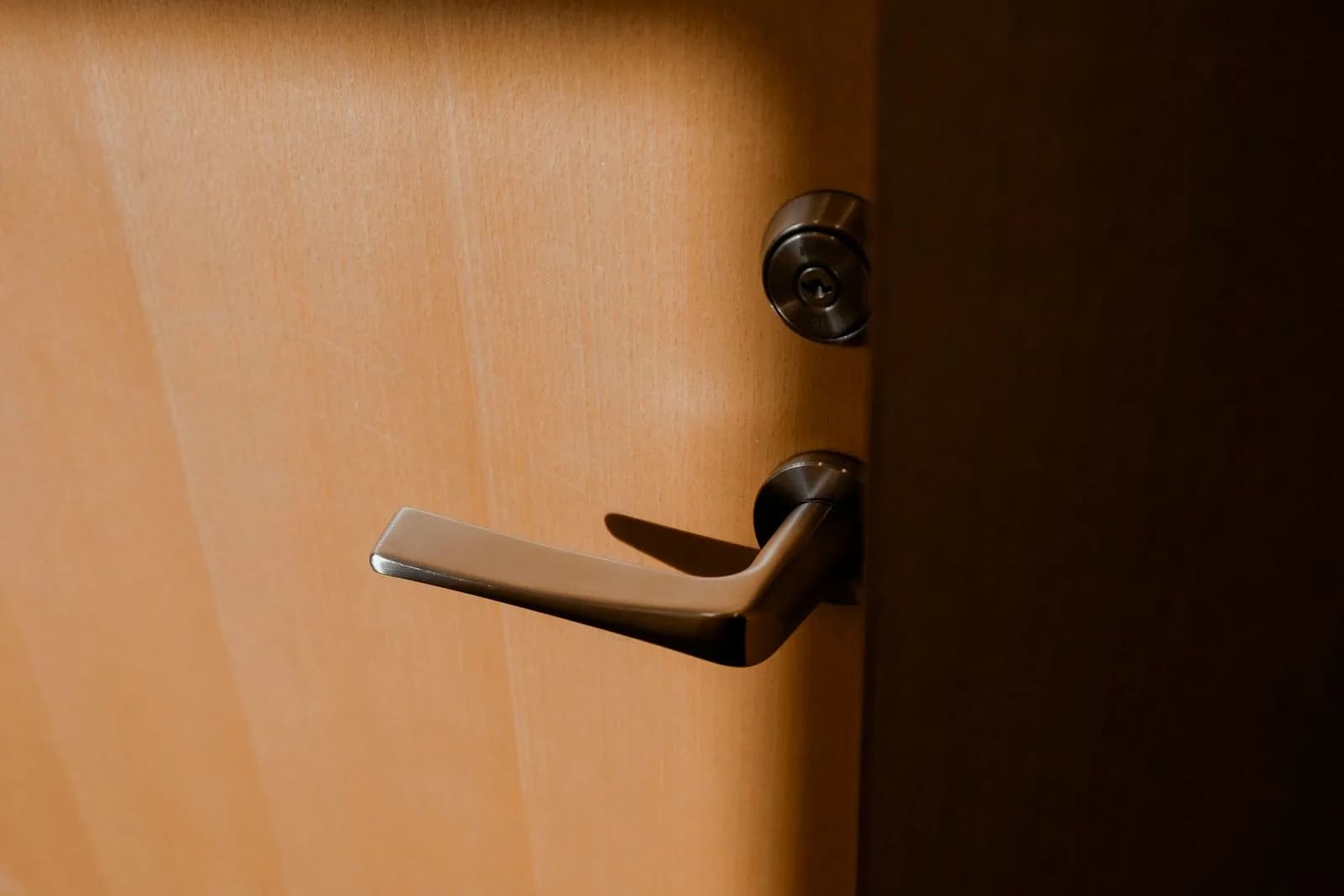
Distinguish a retrofit motor that turns an existing cylinder from a factory-integrated lock or a reader controlling electromechanical multipoint locking. Not every option suits a European cylinder, the door thickness, pull handle or opening direction. On a new door, agree the integration before manufacture so cables, hardware and service access can be designed properly.
02
Choose fingerprint, PIN, phone or credential around real users
A fingerprint reader is quick and requires nothing to carry, but it should store several fingers and make user removal straightforward. A keypad is useful for temporary visitor or contractor codes. A phone enables remote management, yet depends on its battery, the app and an account. A card or fob is simple, but can be lost just like a key.
A resilient setup normally offers at least two independent routes in. This might combine biometrics with an administrator PIN and mechanical override, or an app with external emergency power contacts. Decide how a child, older relative and guest will enter, and what happens when the owner replaces or loses a phone.
- verify local operation without internet or mains power
- define who may add and remove users
- confirm compatibility with the cylinder and multipoint lock
- plan and test a secure emergency entry method
03
Electronics do not replace a resistant door construction
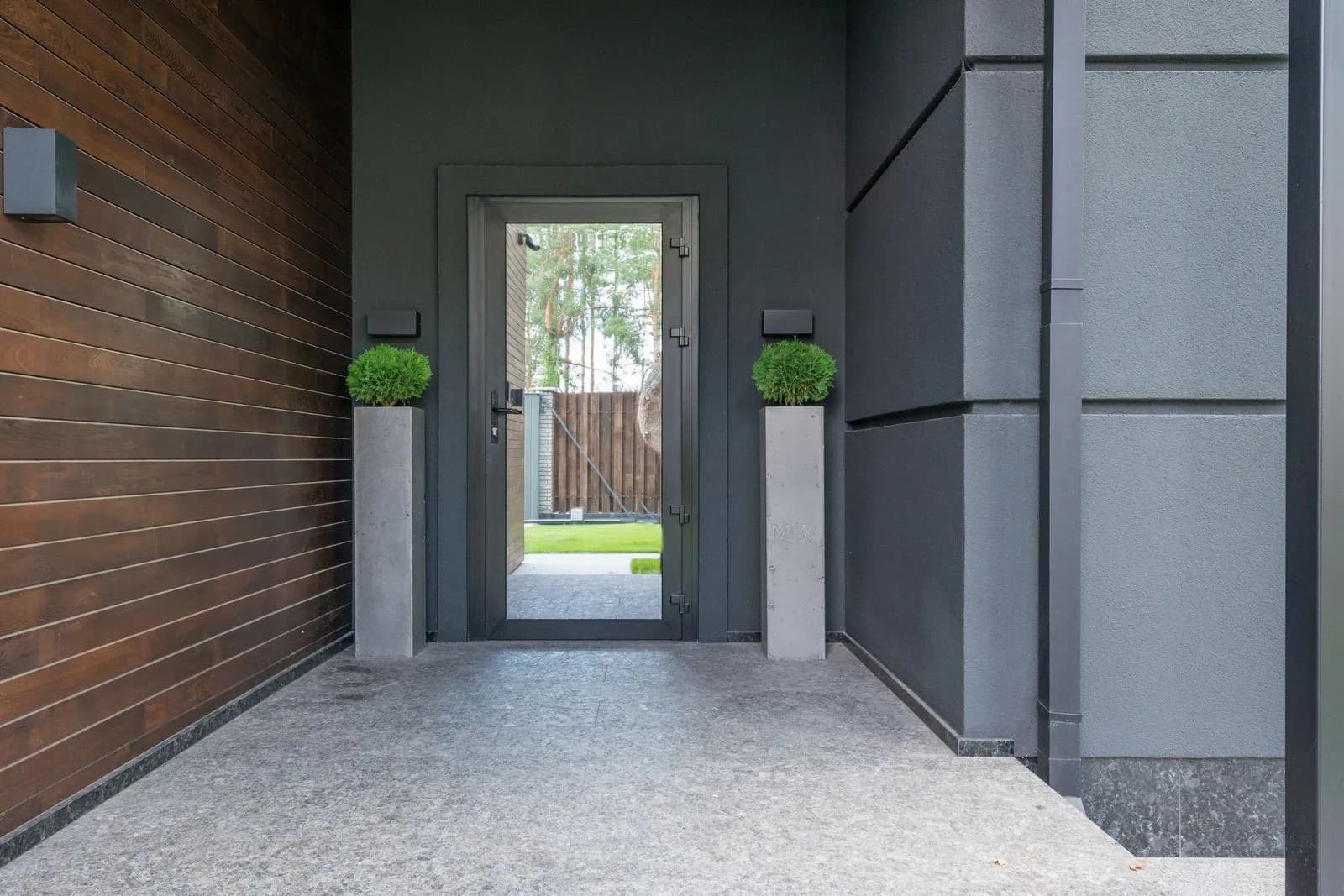
A smart feature does not automatically improve burglary resistance. Mechanical protection still comes from the complete assembly: leaf, frame, keeps, hinges, lock, cylinder, glazing and installation. If the door has a declared resistance class, agree any hardware change with its manufacturer. Unplanned drilling or substitution can alter the tested configuration.
Prefer a system that can distinguish a lock command from the actual position of the leaf and bolts. A message saying that the motor ran does not always mean a door left ajar is properly secured. Door-state sensing, correct gasket compression and periodic hardware adjustment reduce this gap between a digital status and physical reality.
04
Cybersecurity needs attention before purchase and after installation
The European Commission explains that the Cyber Resilience Act covers products with digital elements whose intended or foreseeable use includes a connection to a device or network. It introduces cybersecurity and vulnerability-handling duties across the product lifecycle. For a buyer, that leads to practical questions: how long are security updates supplied, how are flaws reported, where is data processed and will basic operation survive closure of the cloud service?
After installation, replace default credentials, enable two-step verification, disable unnecessary remote access and apply updates promptly. Separate personal accounts are better than one household password. A contractor's access should expire automatically, while a lost phone, card or fob should be revoked immediately.
05
Power and connectivity require a failure plan
A battery lock should give useful early warnings rather than fail without notice. With a wired system, establish the power-supply location, backup option and service route before finishes are complete. Ask what happens after a power cut, flat battery, router failure and cloud outage. The correct fail behaviour depends on the building and escape strategy, so a house entrance and a controlled communal door cannot simply share assumptions.
Keep alarm or voice-assistant integrations limited to necessary scenes. A voice command alone should not unlock an external door without appropriate confirmation. Event logs may help with maintenance and access management, but treat them as sensitive occupancy data and review the active account list regularly.
06
Use a complete checklist when requesting a door quotation
Provide dimensions, opening direction, handle choice, preferred access methods and information about wiring and the smart-home platform. Ask exactly what the quotation contains. The lock, reader, controller, power supply, cabling, emergency cylinder, setup and user training may not all sit in one line item.
At handover, test every account, the emergency method, ajar-door warning, manual locking from inside and behaviour with the network disconnected. Keep the instructions, recovery codes, support-end date and service contact. Good documentation prevents long-term access from depending on one installer's memory.
The key takeaway
A good smart lock combines sound door mechanics, at least two entry routes, a clear failure plan and maintained software. For a new entrance, specify it as part of one coordinated door system instead of attaching an arbitrary motor after installation.