Timber doors · 5 min read
Timber-aluminium front doors: when exterior cladding earns its keep
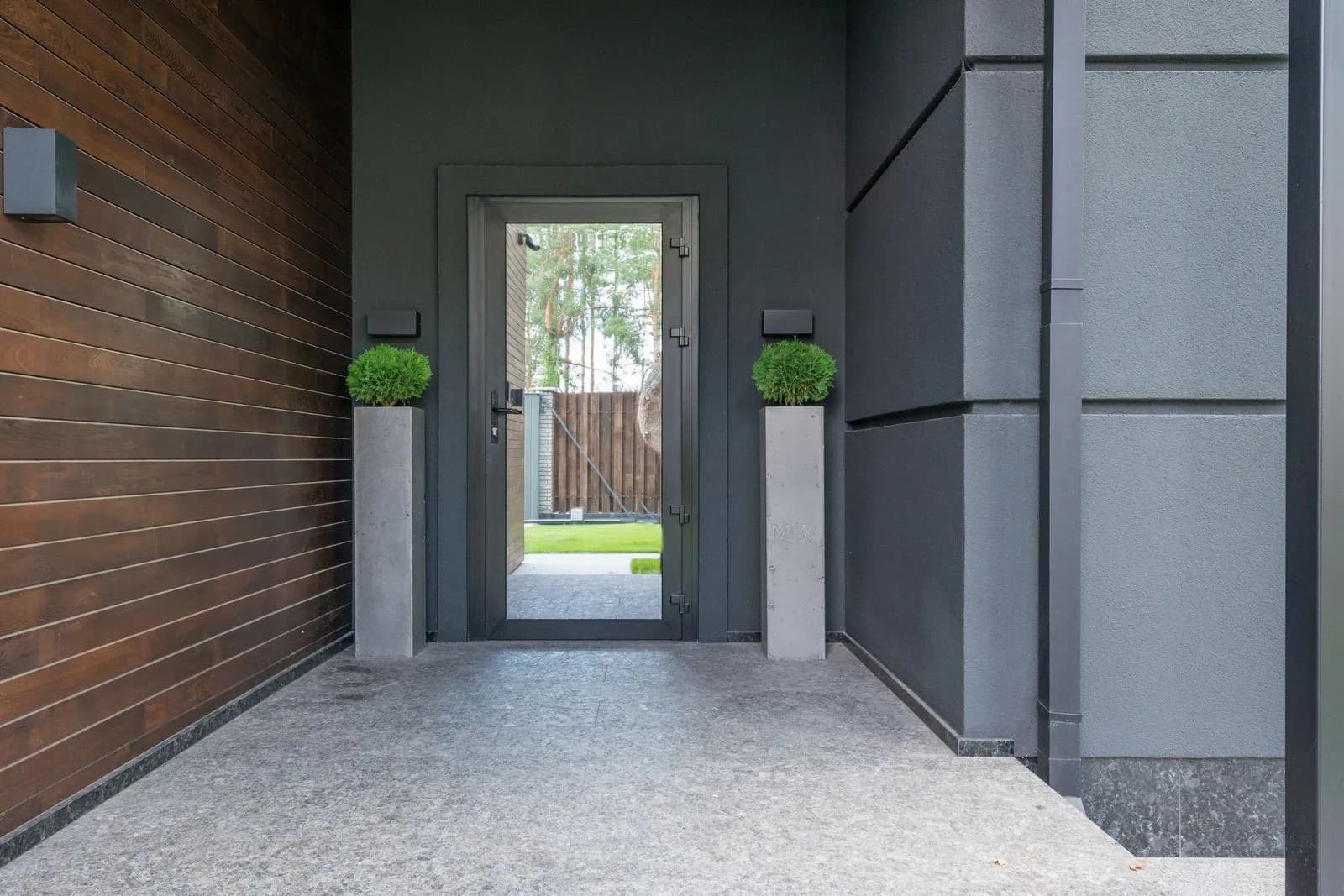
From the hall, it looks and feels like a timber door. From the drive, aluminium shields the surface. This combination suits exposed entrances and houses where the door needs to match anthracite windows or a garage door without bringing the same cool finish indoors. It reduces work on the weather face, but seals, hardware and thresholds still need attention.
LUPOL editorial team · Published: 12 August 2026
Photo: LUPOL / LUPOL · source and licence
In this article
01
Aluminium faces the drive; timber still belongs in the hall
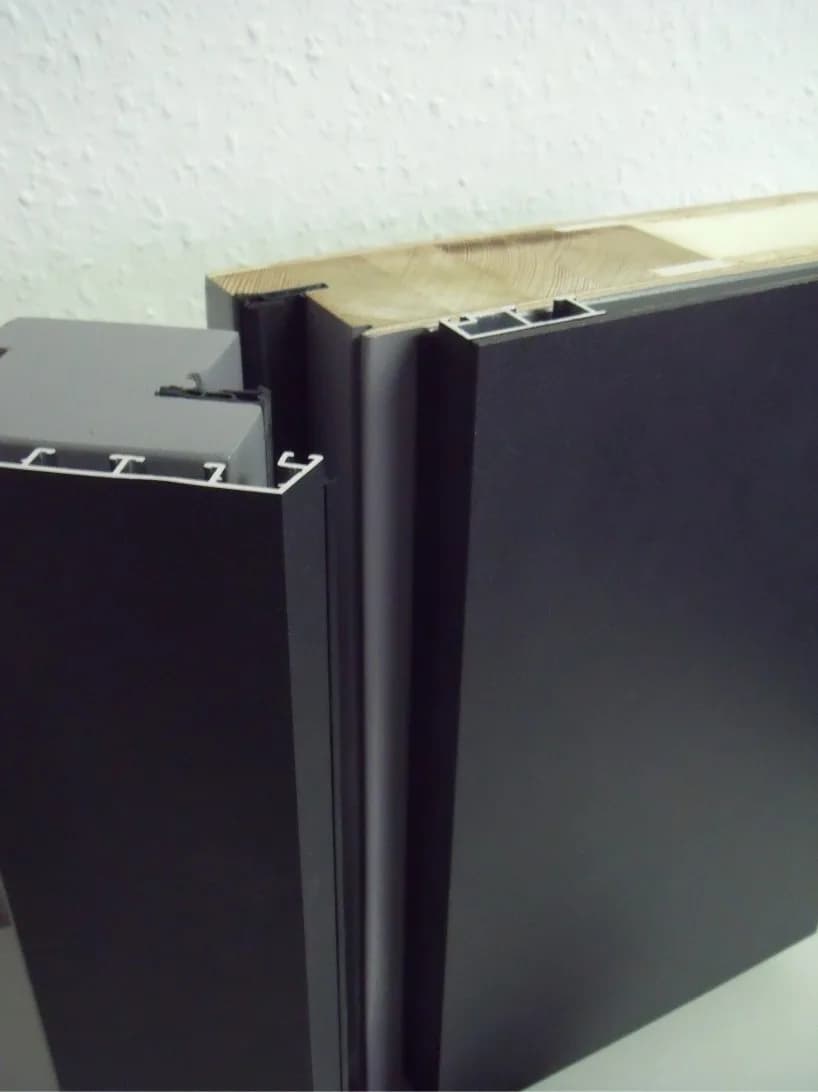
A timber-aluminium door is not an aluminium leaf printed with a wood pattern. Its structure remains timber, with a metal skin fitted to the exterior. You retain genuine grain and a warmer material inside. Outside, the entrance can have a clean painted plane that lines up visually with the rest of the joinery.
Ask what the cladding actually covers. Some systems protect both leaf and frame, while others leave different profile areas visible. A corner section and a photograph of the open door reveal far more than a front elevation. They show where the aluminium ends, how the seals sit and which timber edges remain exposed outdoors.
02
The clearest benefit appears at entrances with little shelter
A dark south- or west-facing leaf can become very hot. An entrance facing open ground may receive wind-driven rain whenever the weather turns. Here, the aluminium face takes exposure that would otherwise land directly on the timber coating. That is a practical reason to specify it, quite apart from appearance.
Aluminium also expands as its temperature changes, and a dark finish heats more than a pale one. Clearances, cladding fixings and the construction of the complete doorset still matter. The metal skin is not a cure for a poorly designed leaf. Request declared performance for the full door in the ordered size.
03
A small anthracite swatch can mislead you
Two finishes on one entrance create useful freedom. Pale pine, an oak face or a quiet translucent stain can suit the hall. Outside, a matt RAL colour can repeat the windows, flashings or garage door. The facade colour does not have to continue into a timber interior.
View samples vertically, in sun and shade. Texture, gloss and the neighbouring render alter the way a colour reads. If the garage door is already installed, supply its manufacturer and precise finish code. A RAL number alone may not create a visual match when one surface is smooth and the other has a fine structure.
04
There is less upkeep, not zero upkeep
Cladding reduces maintenance on the most exposed timber face. The door still needs washing, clear drainage and sound seals. Once a year, inspect the bottom edge, threshold, corners and the area around the pull handle. Grit trapped against a gasket can cause more trouble than using an ordinary mild cleaner instead of a specialist aluminium product.
The interior timber lives in gentler conditions, but prolonged damp can still mark it. A wet mop left against the frame or a vestibule that never dries are common problems. Care instructions should cover both materials and name any cleaners that must be avoided.
05
Compare finished entrances, not bare leaves
A useful quotation states size, leaf construction, threshold, lock, hinges, handle and the exact cladding area. It should also give doorset performance for heat transfer, air permeability, watertightness and wind resistance. EN 14351-1 concerns the complete product, so one strong material cannot stand in for a result for the whole assembly.
LUPOL can combine a timber entrance door with an external aluminium skin and finish each side around the house design. Send a facade photograph, opening dimensions, orientation and details of any canopy with the enquiry. That turns the first conversation into a discussion about the right specification instead of a random catalogue model.
The key takeaway
Aluminium cladding earns its keep on an exposed elevation or where the entrance needs two very different finishes. Timber still gives the door its character; the metal face takes the weather. Base the decision on the building's orientation and a section of the actual system, not the material name alone.