
Roller shutters · 3 min read
Built-In, Top-Mounted or Front-Mounted Roller Shutters?
The best shutter type is largely determined by when it is installed and where its box can sit. New construction offers different choices from a window-only replacement or a finished façade.
LUPOL editorial team · Published: 17 July 2026
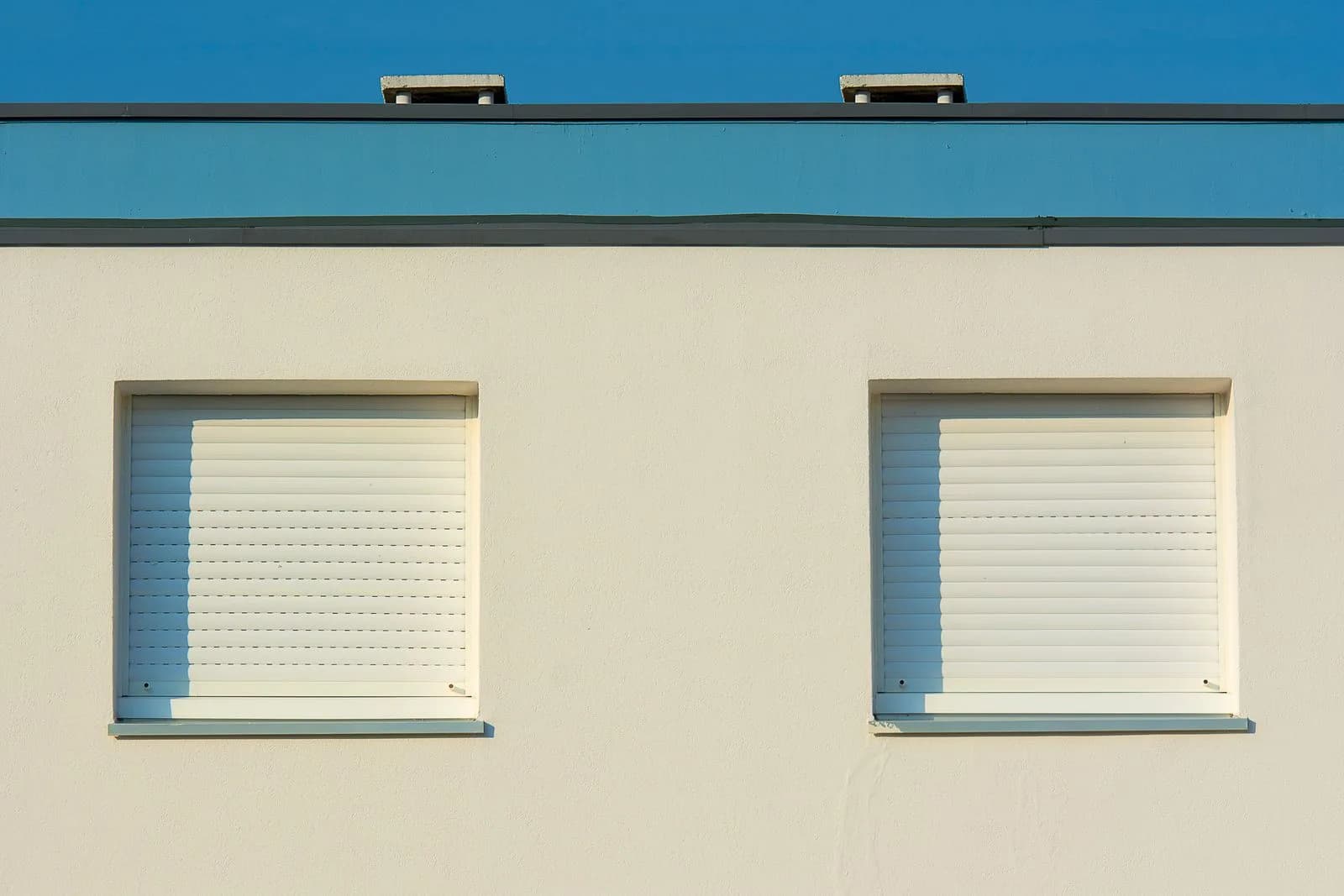
Photo: Jan van der Wolf / Pexels · source and licence
In this article
01
Built-in systems disappear into the façade
A built-in box is planned at the head of the opening and covered by the external façade build-up. It can produce a clean appearance, but needs enough space, continuous insulation and a defined external service route.
The decision must be coordinated before the façade and often before the windows. Late changes can reduce glass height or create a difficult thermal bridge at the lintel.
02
Top-mounted shutters travel with the window
A top-mounted box attaches to the window and the assembly is installed together. This makes it relevant during window replacement as well as new construction, subject to opening height and structural preparation.
Because the box occupies part of the opening, glass area and head insulation require attention. Confirm whether service access is from inside or outside and how the cover will be finished.
03
Front-mounted systems suit completed buildings
A front-mounted box sits on the façade or within the external reveal and can often be added without replacing the window. Box shape and colour become visible architectural choices unless the façade is being rebuilt around it.
Check whether the box or guides reduce daylight, clash with outward openings or cover ventilation paths. Fixings must suit the actual wall and insulation system.
04
Service access is a design feature
Motors, axles and curtains eventually need inspection. A hidden box is only successful if its access cover can be reached without damaging plaster, furniture or waterproofing.
Ask who can service the system and from which side. Integrated insect screens add another moving component and need independent access and operation.
05
Select shutters with the windows and wall section
Provide wall build-up, opening dimensions, window position, lintel and façade finish before choosing a system. Include wiring, controls, insect screen and curtain size in the same schedule.
LUPOL can coordinate external shutters with its windows. Early selection protects glass area, insulation continuity and the clean appearance that built-in systems are intended to provide.
The key takeaway
Choose shutter type by construction stage, box location and service access. Coordinating it with the window and wall section prevents lost daylight, hidden thermal bridges and inaccessible repairs.