
Roller shutters · 3 min read
Do External Roller Shutters Reduce Heat Loss and Overheating?
External shutters can reduce solar heat before it enters in summer and add a sheltered air layer at night in winter. The actual saving depends on window, box, operation, climate and household behaviour.
LUPOL editorial team · Published: 17 July 2026
Photo: Jan van der Wolf / Pexels · source and licence
In this article
01
Summer benefit comes from stopping sun outside
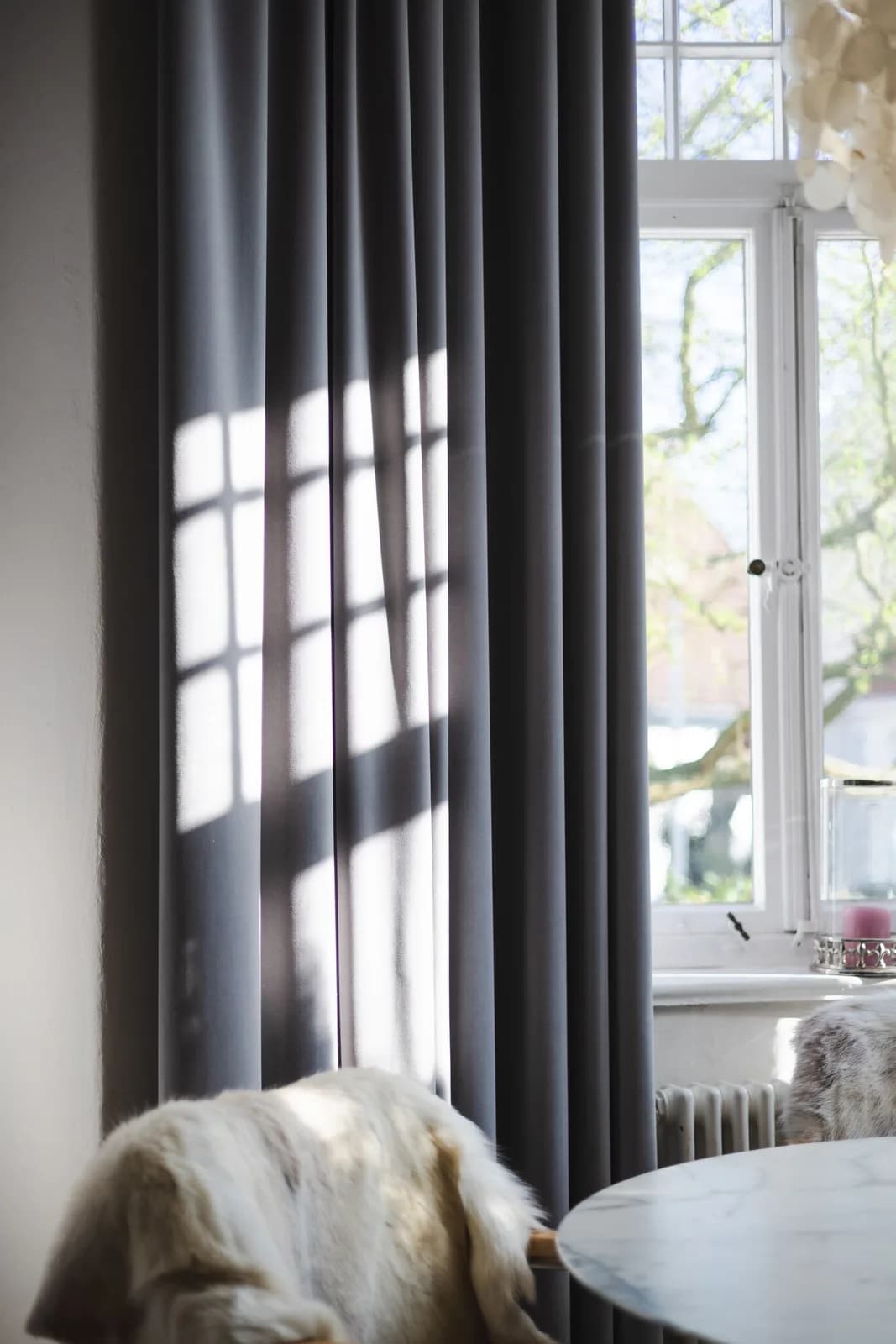
A lowered external curtain intercepts direct radiation before the inner glass and room surfaces heat up. This is generally more effective for overheating control than an internal blind, which acts after sunlight has crossed the glazing.
Complete closure is not always necessary. Timed or sensor-based positioning can balance shade, view and daylight, especially on east and west façades.
02
Winter shutters change the boundary around the window
A closed shutter reduces wind washing over the glass and creates an additional air space. This can lower heat transfer through the opening during cold periods, although the effect varies with curtain, guides and leakage.
An uninsulated or leaky shutter box can offset some benefit. The box-to-wall and box-to-window junction deserves the same attention as the window perimeter.
03
Operation determines realised performance
A shutter left open during peak summer sun cannot control solar gain, while one left closed on a bright winter day may block useful warmth and daylight. Seasonal schedules need to respond to orientation and occupancy.
Automation can use time, sunlight and temperature inputs, but manual override remains important. Controls should avoid trapping occupants or closing onto obstacles.
04
Comfort, privacy and noise are additional benefits
Shutters provide adjustable privacy and darkening and can reduce weather exposure to the window. Some configurations also change perceived external noise, but a shutter should not be sold as a substitute for properly specified acoustic glazing.
Bedrooms often value blackout and privacy more than the calculable energy saving. Define the primary outcome so curtain perforation, control and insect screen are selected appropriately.
05
Evaluate the complete system
Ask for the shutter type, curtain material, box insulation, drive, guides and control strategy. Compare its cost with other shading measures and with the cooling demand of the actual façade.
LUPOL can coordinate shutters with new windows so box dimensions and insulation are resolved together. Avoid universal percentage-saving claims unless they come from a calculation for the stated building and usage.
The key takeaway
External shutters are adaptable energy and comfort controls, not a fixed saving percentage. Their value rises when box insulation, orientation-aware operation and window specification are planned together.